
At LaserTat, your comfort and safety are our top priorities. After your laser tattoo removal session, proper aftercare is essential to ensure your skin heals well and without complications. Here is what to do from the moment you leave the clinic.
1. Initial bandage and Laseraid aftercare gel
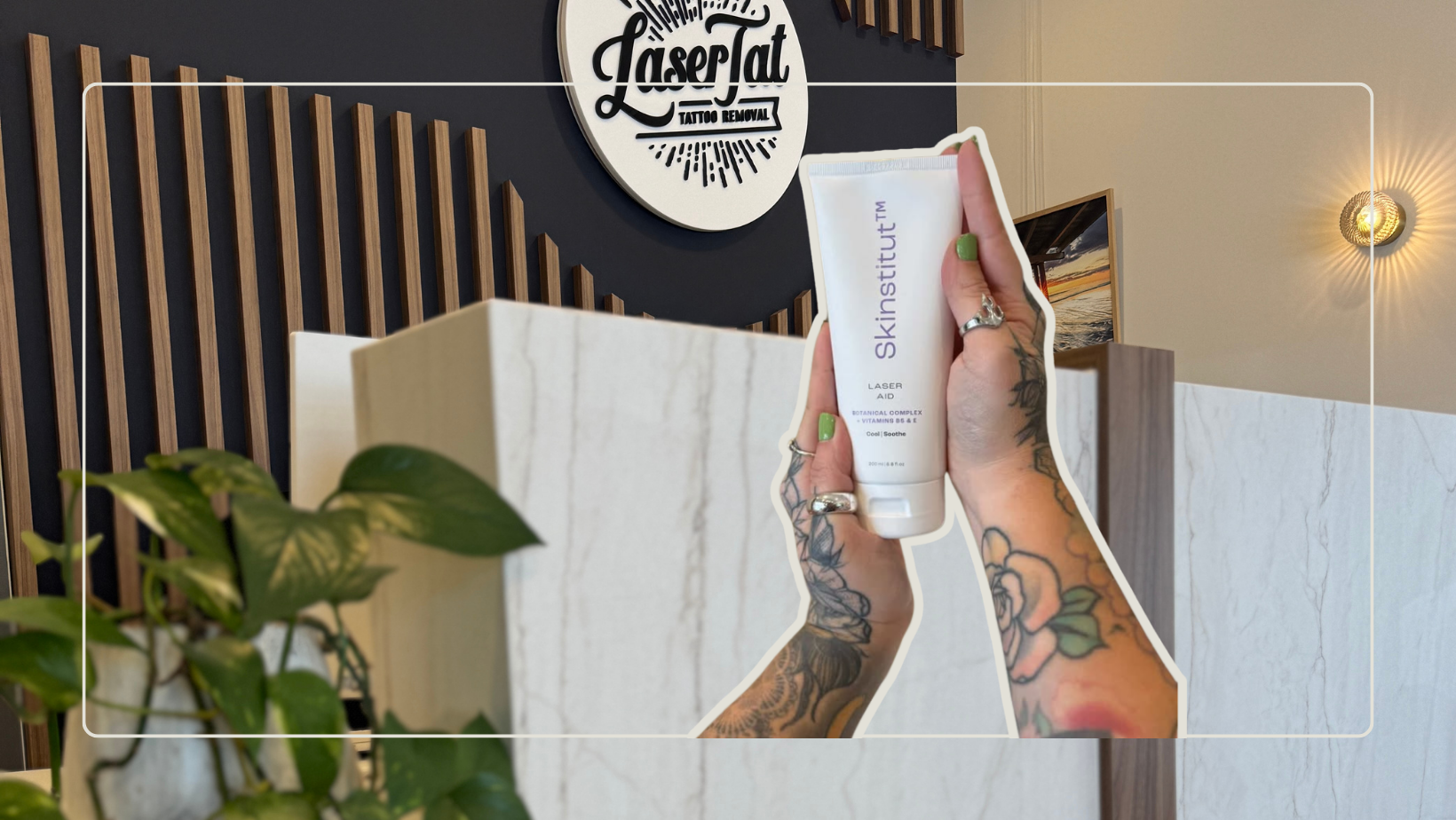
Immediately following your treatment, your laser technician will bandage the area and apply Laseraid aftercare gel to protect your freshly lasered skin. This helps cool the skin and keeps the area clean as it begins to heal. Before you leave, your technician will walk you through the aftercare steps and provide take-home instructions. Keep the bandage on until you get home, then follow the steps below.

2. Keep it clean and dry
Once you get home, or after three hours, you can remove the bandage. Keep the area clean and dry to prevent infection. Gently cleanse with a mild soap or antibacterial wash and water, then pat dry. Do not rub. Avoid soaking the area in water, so stay out of baths, spas, saunas, and swimming pools for the first few days. Showering is fine, but keep the water temperature cool over the treated skin.

3. Apply Laseraid aftercare cream
We recommend applying Skinstitut's Laseraid to the treated area, which is our preferred aftercare product. Aloe vera is a suitable substitute. Both help keep the skin cool, moisturised, and protected. Apply two to three times a day for the first few days, or up to a week while healing. Once the skin is fully healed, you can stop using the aftercare cream or switch to a daily moisturiser if the skin is still dry or itchy.
LaserTat tip: Keep your Laseraid cream in the fridge for added comfort.

4. To cover or not to cover?
You can leave the area uncovered if you are in a clean environment and out of the sun. Avoid tight clothing or anything that might rub or irritate the skin. We recommend covering the area with a breathable, non-stick bandage if you need to protect it from dirt and bacteria, or if it will be exposed to the sun during the healing stage.
LaserTat tip: If the area is swollen (particularly on the lower limbs), elevate when you can and apply a cold compress. This helps with blood flow and reduces swelling.
5. No scratching or picking
As your skin heals, you may experience itching, scabbing, and in some cases blistering. This is all a normal part of the process and can last up to a week or more. Resist the urge to pick or scratch. Let your skin heal naturally to avoid scarring or infection.
LaserTat fact: Blisters from laser tattoo removal are caused by the friction of the laser pulsating repeatedly into the skin, not from a burn. The fluid inside a blister actually helps heal the underlying skin, which is why we recommend leaving them intact.
6. Avoid sun exposure
Your treated skin will be more sensitive to the sun, so avoid direct sun exposure for at least two weeks. If you need to be outside, cover the area with clothing or apply a broad-spectrum SPF 50 sunscreen. For the best results, it is important to treat skin at its natural tone, so avoid tanning in the sun, especially during the summer months.
Can I fake tan? Once the area is fully healed (usually within a few days to a week), you can use tanning products over the area.
7. Stay cool
Heat can irritate freshly treated skin, so avoid intense physical activity that causes excessive sweating for a few days. Keeping the area cool will help reduce swelling and irritation. If you love to exercise, stick to light activity during the healing stage, such as walking or training areas of the body away from the treatment site.
8. Stay hydrated and healthy
Drinking plenty of water and maintaining a healthy diet will support faster healing. Your body needs all the help it can get to repair your skin and fade the ink.
LaserTat tip: Light massage to the area once healed can help promote blood flow and support your immune response to eliminating ink particles.
9. Monitor for any issues
Some redness, swelling, bruising, blistering, and tenderness after treatment is normal. Keep an eye on the area for signs of infection, such as increased pain, heat, or discharge. On rare occasions, clients can have a reaction to the tattoo pigment in their skin, causing significant itchiness. If you notice anything unusual, contact us and we will advise you on next steps.
10. Boost your results with our skin services
Good aftercare lays the foundation, but there are also treatments that can actively support your healing and improve your results between sessions.
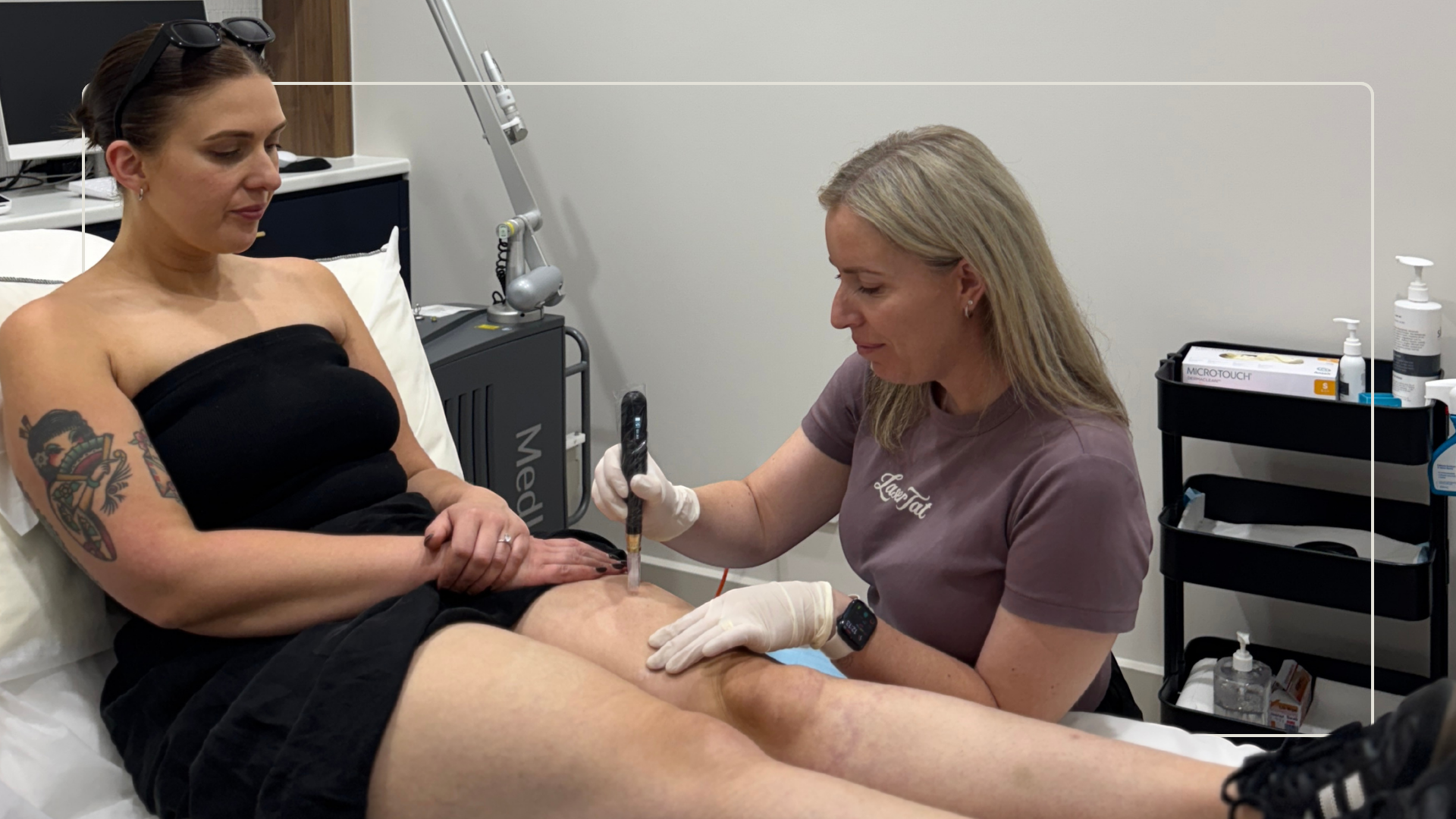
Skin needling uses tiny, controlled micro-channels to stimulate collagen and elastin production in laser-treated areas. This helps repair the skin, smooth uneven texture, reduce shadowing, and support the breakdown of residual ink. It is a powerful add-on for clients who want clearer, healthier skin throughout their removal journey.
Lymphatic massage offers gentle, targeted support to help your body flush out ink particles, reduce swelling, and recover more comfortably between sessions. By stimulating the lymphatic system, it encourages the natural flow of lymph fluid, eases inflammation, and promotes better circulation.
By following these aftercare steps, you are setting your skin up for the best possible outcome.